September 29, 2026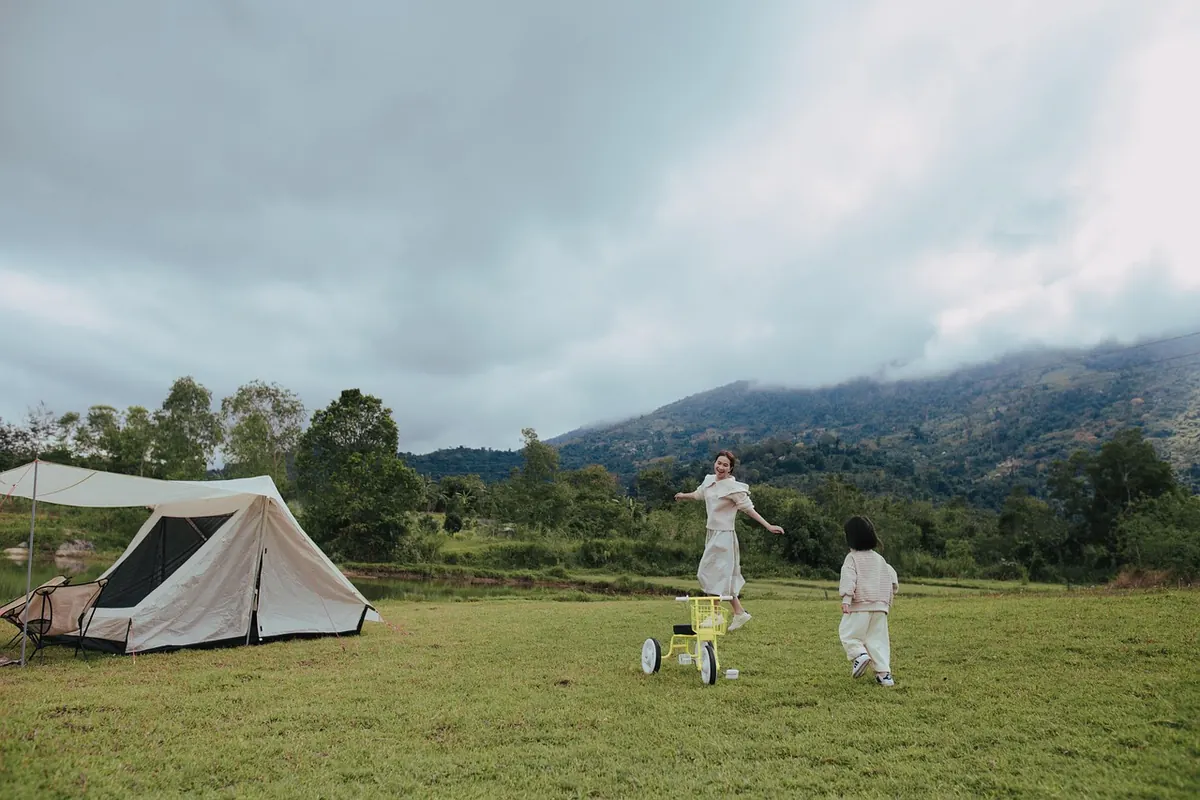
A rain forecast is not a reason to cancel. It is a reason to pack differently. Some of the best nights under canvas happen in weather that sends most people home — the site quietens down, the crowds disappear, and a mug of tea in the porch while rain drums on the flysheet is genuinely one of the good bits. What makes the difference is not luck. It is pitch choice, a dry sleeping bag, and a routine you can run without thinking.
Ground first, view second
Most wet-weather misery starts before the tent comes out of its bag. Water always finds the low point of a field, so avoid hollows, dips and the bottom of a slope. Walk the pitch and press a hand into the grass: if it feels spongy and water rises around your boot, keep moving. Short, tussocky grass on a gentle slope drains far better than neat, close-cropped turf that has been compacted by years of caravans.
A few things to check before you unclip anything:
- Height, not scenery. A slightly raised spot a few metres up a slope beats a flat pitch with a view of the lake.
- Tree cover is a trap. Branches keep dripping long after the rain stops, and they shed debris onto your flysheet.
- Avoid the obvious path. Ground either side of a gate or track turns to mud first.
- Look uphill. Pitching below a steep bank means run-off arrives at your door.
- Note the wind. In Britain it usually swings round from the south-west. Pitch so the lowest end faces the wind and the door faces away.
Pitch it like you mean it
A loosely pitched tent flaps, flexes and leaks. Peg every guy line you have, tension them so the flysheet stands clear of the inner, and re-tension before you sleep — nylon stretches when it is wet. If you use a footprint or groundsheet protector, make sure it is slightly smaller than the tent floor. Anything sticking out collects water and wicks it underneath you.
Ventilation matters more in rain, not less. A sealed tent becomes a condensation chamber: your breath and damp clothing put a surprising amount of moisture into the air, and by morning the inside of the flysheet is running. Open the high vents, crack the door on the sheltered side, and keep wet kit out of the sleeping area.
The porch is your wet room
Boots off, waterproofs off, everything hung or piled well away from the inner door. A small square of mat or an old bin bag on the groundsheet stops the mud spreading across the rest of the tent.
Dress for drizzle, not downpour
Cotton is the enemy. Once a T-shirt or a pair of jeans is wet it stays wet, pulls heat out of you and will not dry overnight. Build your layers from synthetics or merino wool, and think in three parts: a base layer that moves sweat away, a fleece or light insulated layer, and a waterproof shell with taped seams. Pit zips are worth having — you will overheat on the climb and cool down fast at the top.
Waterproof trousers get left at home and then regretted. Gaiters stop water running into your boots, and on a long wet walk they are the difference between damp socks and genuinely cold, unhappy feet. Take two hats and two pairs of gloves; wet gloves are useless.
Keep one set of clothing that never leaves its dry bag. It is for sleeping only. The rest of your kit can get wet — you just want a reward waiting at the end of the day.
Keep the sleeping bag the one dry thing in camp
Your sleeping bag should live in a waterproof stuff sack from the moment you leave the car, and it should only come out once the tent is up and the porch is organised. Soak it and the trip is over.
Warmth comes as much from underneath as above. A mat with decent insulation stops the cold ground pulling heat out of you, and in a British spring or autumn that matters as much as the bag's temperature rating. If you are cold, put a hat on, fill a water bottle with hot water and wrap it in a sock, and eat something — digesting food generates heat.
If there is a dry spell in the morning, unzip the bag and let it air. And put tomorrow's clothes in the bottom of the bag with you overnight. They will be warm and dry when you wake up.
Cooking when everything is wet
Wet-weather cooking is about efficiency, not ambition. Boil water once and use it for everything: pasta, a hot drink, washing up. One-pot meals — noodles with vegetables and a tin of something, chorizo and couscous, a curry made at home and reheated — beat anything that needs three pans and careful timing in the rain.
A windshield around the stove makes a real difference in wind, and a tarp rigged over the picnic table creates a kitchen you can actually use. Many sites ban open fires and disposable barbecues even when the ground is sodden, so check before you plan your evening around one.
Never cook inside a closed tent. Stoves produce carbon monoxide, and tents are not ventilated enough to make that safe. Cook in the porch with the door open, or outside under the tarp, and keep the stove well away from flysheet fabric.
Run a routine that keeps spirits up
Small habits stop a wet trip turning into a grim one.
- Wet kit stays in the porch. Never let soaked waterproofs touch the inner tent.
- Use one dry bag for wet clothes and a separate one for things that must stay dry: phone, head torch, spare socks, matches.
- Change out of wet clothes the moment you stop moving. Standing around damp is how you get cold.
- Plan shorter days. A four-hour walk in rain feels like eight.
- Do something in the evening. Cards, a book, a proper brew. Morale is kit.
Before you leave the house
Check the forecast, but treat it as information rather than instruction. A wet weekend with the right kit is still a good weekend; a dry weekend with the wrong kit can be miserable. Run through the essentials before you load the car: waterproof jacket and trousers, gaiters, a dry set of clothes in a sealed bag, an insulated mat, a windshield for the stove, spare socks, and a tarp if you own one. Then put the lot in dry bags and go.
Rain in Britain is not an exception to camping — it is part of the deal. Learn to pitch on ground that drains, keep your sleeping bag dry, and accept that you will be a bit damp somewhere. That is a trip you will remember.
Photo: Jupilu / Pixabay